A town built on coal
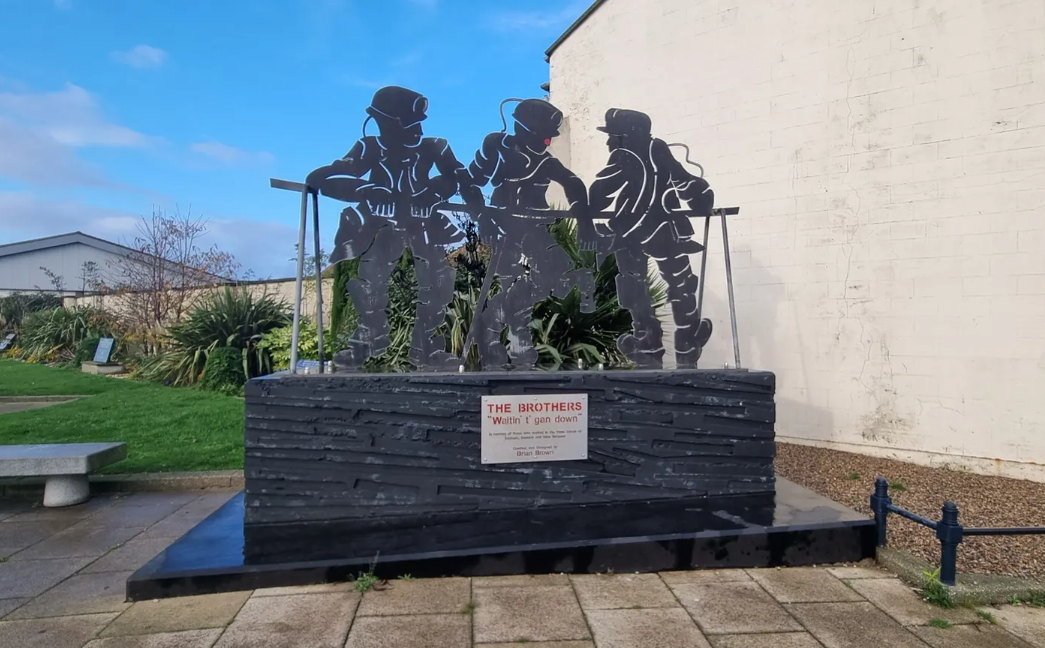
The harbour carried Seaham's coal out to the world. Beneath the streets, generations of miners drove workings far under the North Sea.
Coal did more than provide work. It shaped streets, schools, clubs, friendships and family life. The pits were dangerous, demanding places, but the communities around them became known for solidarity, humour and looking after their own.
Know your pits
Three pits.
One proud town.
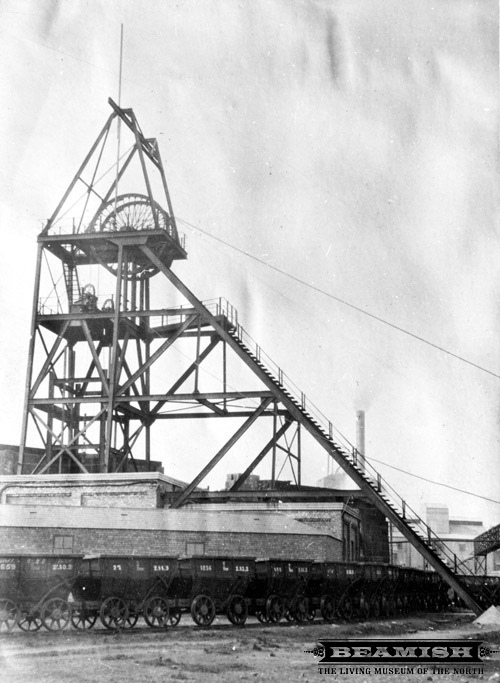
Seaham Colliery began with the sinking of the Low Pit in 1849. Together with the neighbouring High Pit, it became the colliery known locally as the Knack—so the Knack was Seaham Colliery's nickname, rather than a separate fourth mine.
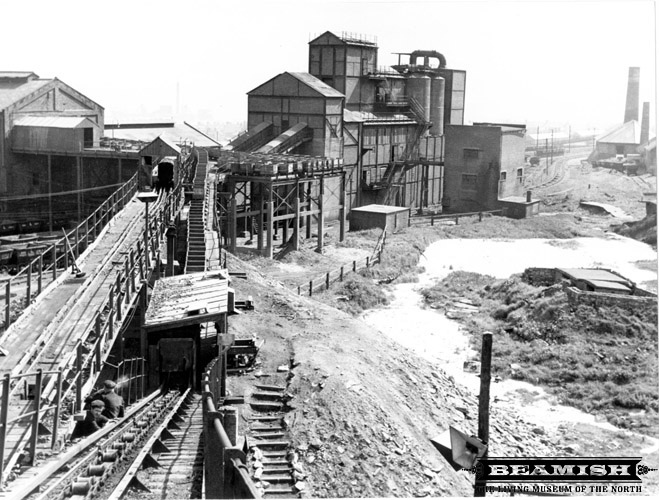
Dawdon Colliery opened in 1907 on the coast at Noses Point. By 1910, around 3,300 miners were producing about a million tons of hand-hewn coal a year.
Vane Tempest Colliery, sunk in the 1920s, was Seaham's final deep mine. It outlasted both the Knack and Dawdon before the last chapter of large-scale coalmining in the town came to an end.
The Knack
A nickname with
deep roots.
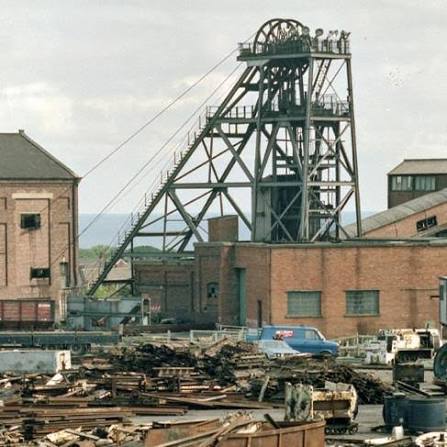
Seaham Colliery's Low Pit and High Pit were among the deepest shafts in Britain when they were sunk. The mine became a major employer and its training centre introduced thousands of apprentices to the industry.
Its history also carried terrible loss. On 8 September 1880 an underground explosion killed 164 men and boys. The disaster remains an essential part of Seaham's collective memory.
More than a workplace
The pits went below the sea. Their communities reached across the whole town.
Dawdon Pit Pond
Warm water.
Cold courage.
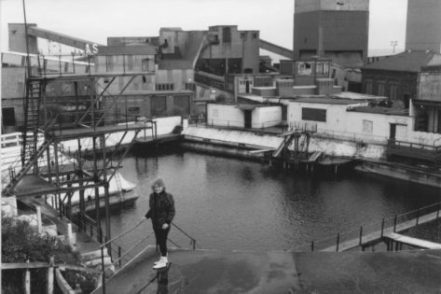
Not every colliery landmark was underground. Dawdon Pit Pond opened in the 1940s, filled by warm water used to cool the pit's air compressors. With Olympic-standard diving boards, terraces, a bandstand and swimming galas, it became an unlikely local lido.
Thousands learned to swim there. The water was warm, the silt was black and judging by the top diving board, Seaham's youngsters were made of stern stuff.
The final shift
Strike, closure
and change.
The 1984–85 miners' strike was a defining moment. Closure followed pit by pit, taking thousands of jobs and changing the economic life of Seaham.
The miners' strike
Families and neighbourhoods endured a bitter year-long dispute whose effects reached far beyond the collieries.
The Knack stops producing
Seaham Colliery was amalgamated with Vane Tempest and ceased producing coal from its old site.
Dawdon closes
Dawdon Colliery closed on 25 July, ending more than eight decades of production at Noses Point.
Vane Tempest closes
The town's last pit shut, bringing Seaham's era of deep coalmining to a close.
A new working landscape
Seaham did not forget its past. It began building its next chapter on the same ground.
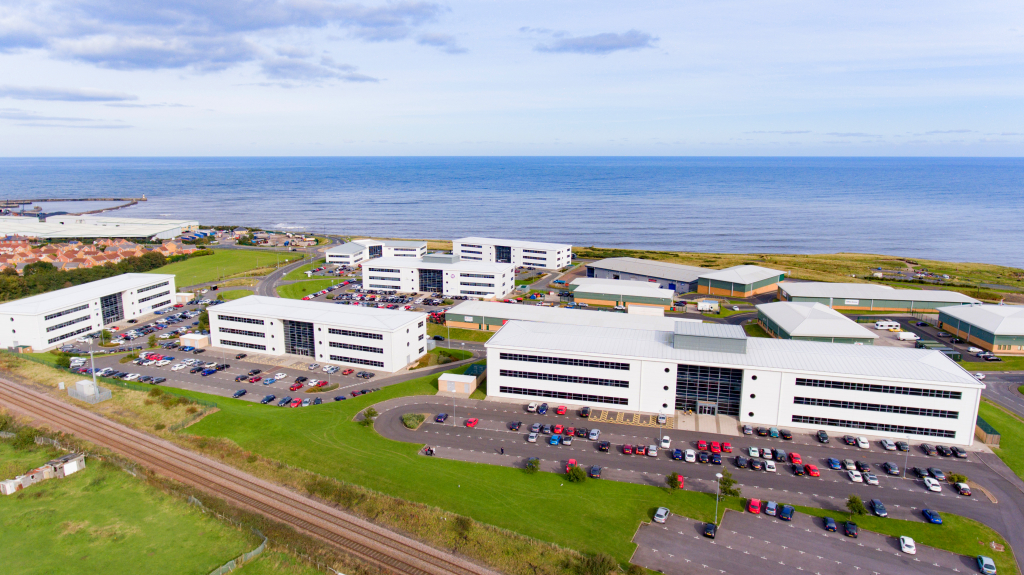
The former Dawdon Colliery site was redeveloped as Spectrum Business Park, replacing pit buildings with modern offices beside the North Sea. Together with newer employment sites, retail, the marina and the restored coast, it forms part of a wider reinvention of the town. The industries have changed; Seaham's habit of getting on with the job has not.
Past below. Future ahead.
Mining built Seaham. Reinvention keeps it moving.
Walk the coast today and the view is greener, cleaner and quieter than it was in the pit years. Yet the names, stories and character of the mining communities remain woven through the town.
Historical note: local sources differ by a year or two on the administrative closure of Seaham Colliery and Vane Tempest. This page distinguishes the end of production at the old Seaham site from the later closure of the combined operation.